Chapter 4: Some lessons from current practice
The freeways: 425–427
the Long Island Expressway, recently described as ‘the longest parking lot in the world’, and on the Shirley Highway leading west out of Washington, which now has to be pulled up from end to end and doubled in width in order to deal with the increased load.
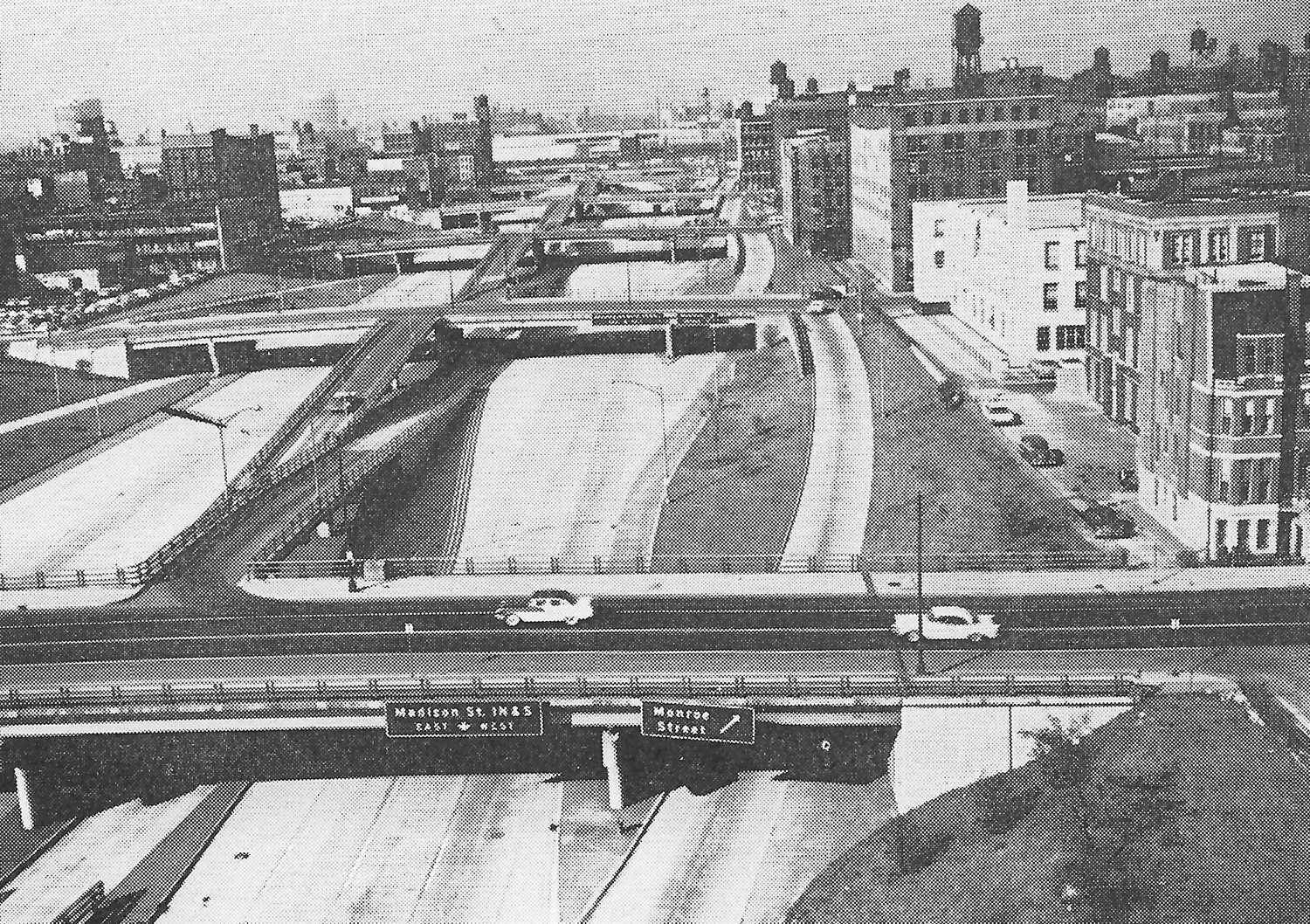
Fig. 239 Chicago. A depressed freeway skirting the downtown area. Note the great scale of the construction, how the local roads flow over the freeway, and the frequency of the access ramps which are about as close as could reasonably be contrived. The down-grade of the ‘on’ ramp assists acceleration, and the up-grade of the 'off' ramp helps deceleration. 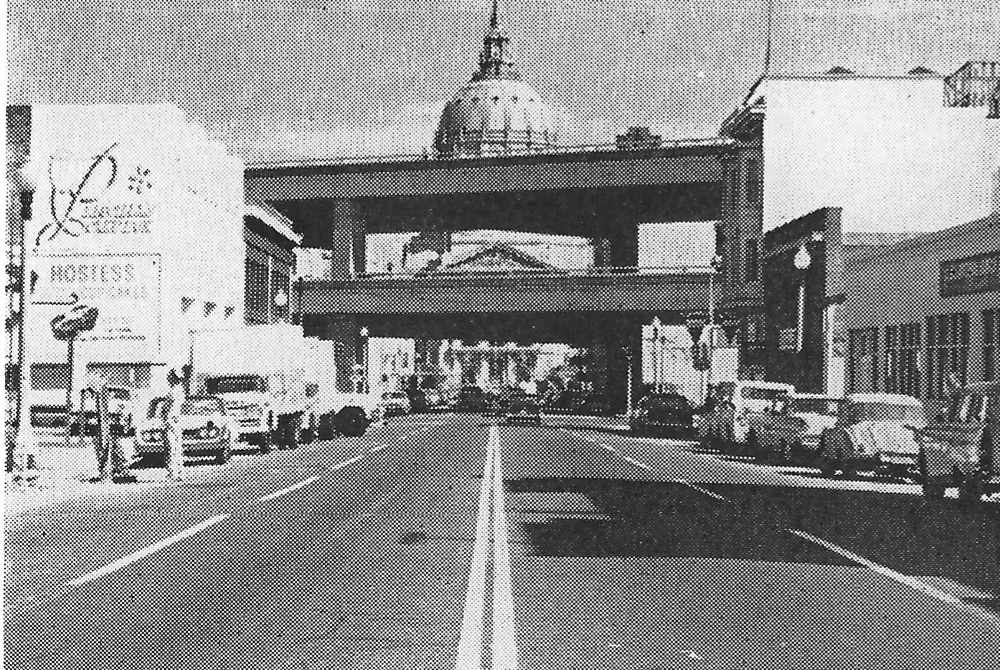
Fig. 240 The obtrusive freeway-the Central Freeway (double-decked) at San Francisco, with the City Hall beyond. 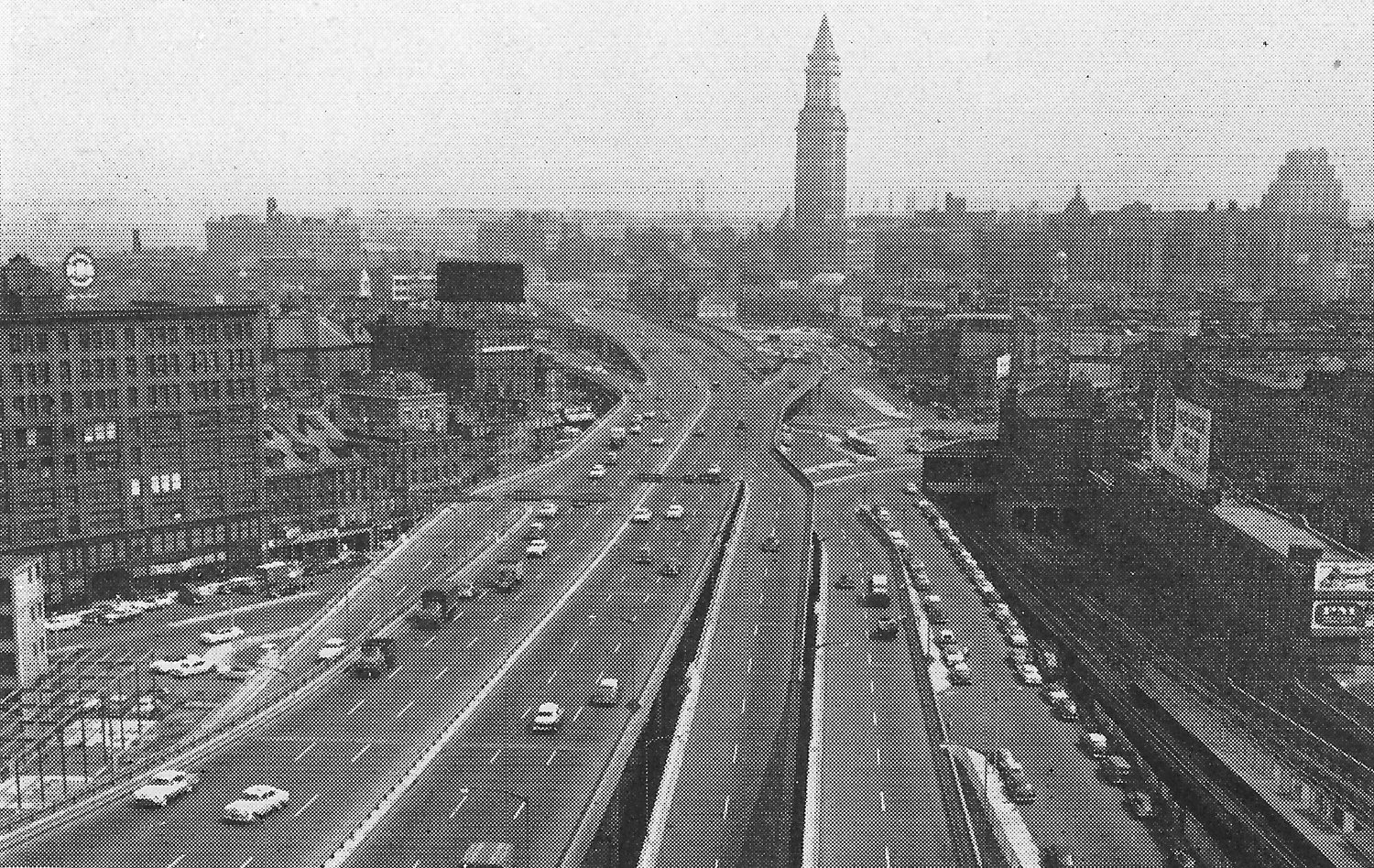
Fig 241 ‘…formidable structures to have to incorporate into cities’ (Boston, Mass.). 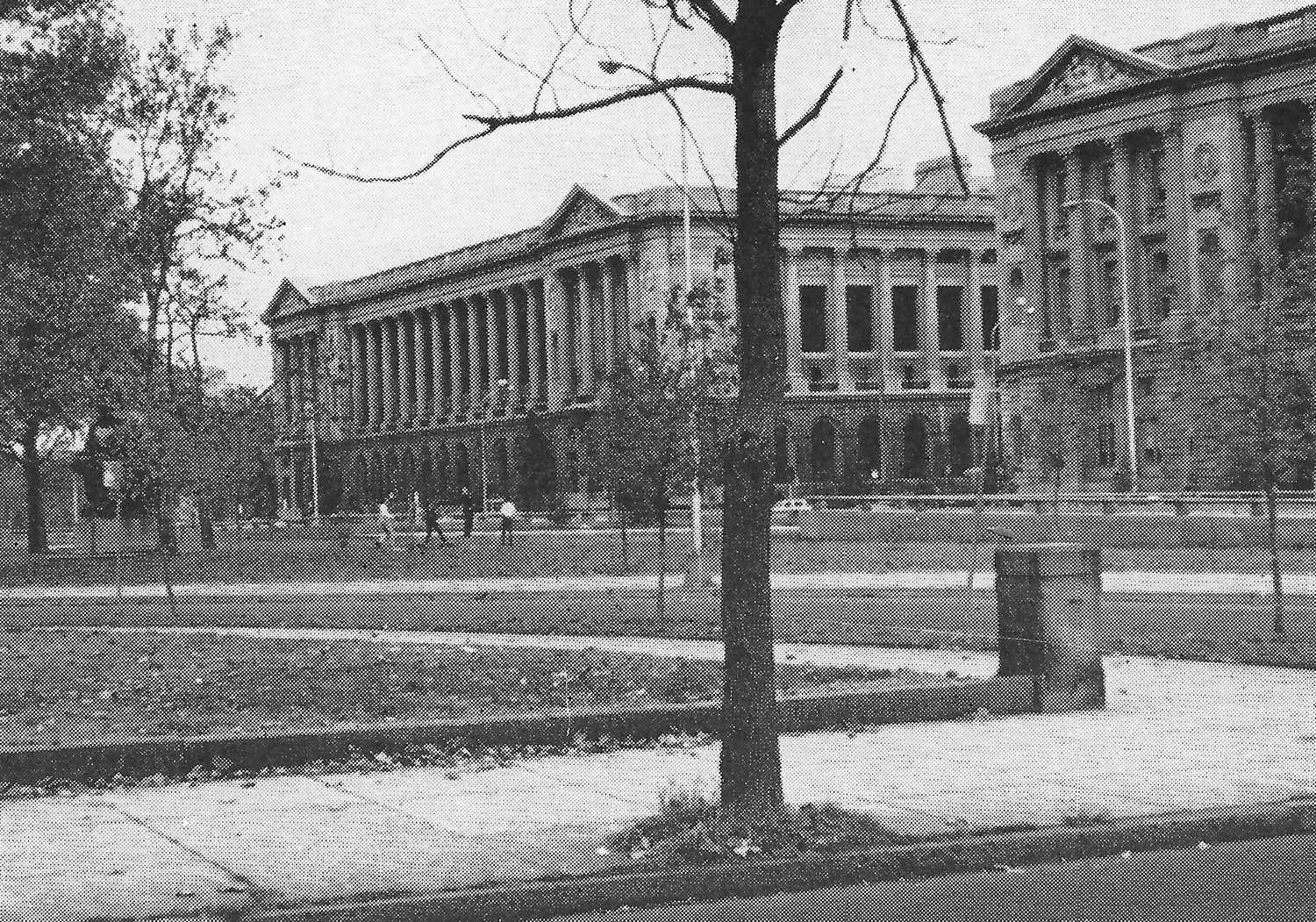
Fig. 243 The unobtrusive freeway-between the camera and the buildings in the background is a 6-lane freeway. Fig. 244 shows how it is done (Philadelphia). 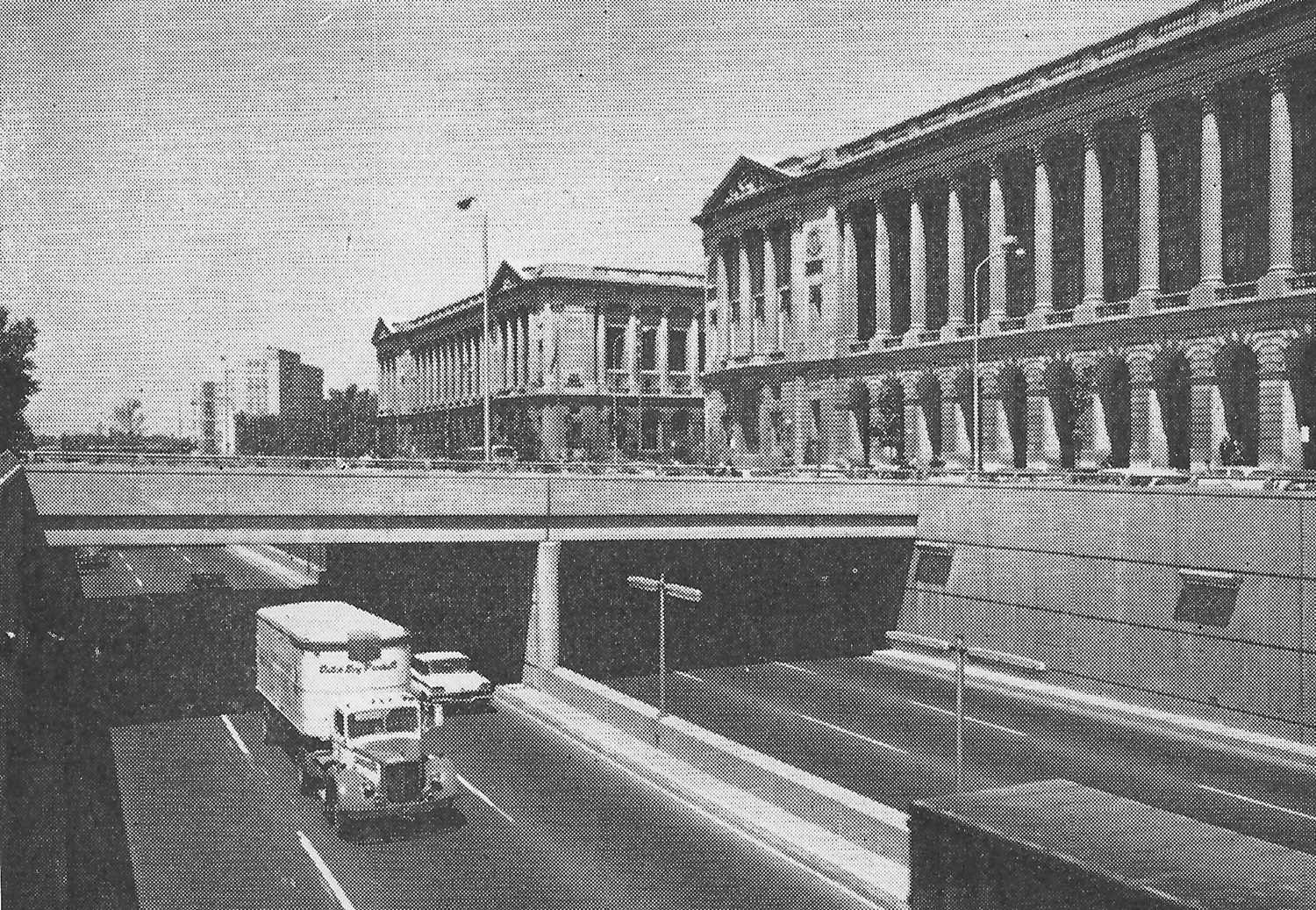
Fig. 244 A close view of the Vine Street Expressway in Philadelphia as it runs in vertical cutting past public buildings. This is a highly successful example of the way in which a major road can be brought almost to the heart of a city without severe disruption.
The freeways
425Widely differing views are expressed even in the United States about the success of the freeways. Looking at the matter objectively it is difficult to escape the conclusion, granted the initial premise of the sprawled out community intent upon using motor vehicles (and indeed sprawled-out on the basis and understanding that motor vehicles would be used) that the freeways are the inevitable, logical result. People declaim against the great destruction of property which the freeways have involved, but this seems to be the price that has to be paid for lack of planning in the first instance. Other people say that freeways ‘never solve the problem’ because they become congested as fast as they are built. This, however, does not always seem to be the fault of the freeways; it is often the fault of continuing sprawl (admittedly often sparked off by the construction of the freeway) which brings new loads of traffic, particularly of persons travelling to work by car. This, it would seem, must be the basic explanation of the situation on the Long Island Expressway, recently described as ‘the longest parking lot in the world’, and on the Shirley Highway leading west out of Washing-ton, which now has to be pulled up from end to end and doubled in width in order to deal with the increased load.
426Although criticism is heard in the United States of the freeways, it would be wrong to say that there has been a violent reaction against them. Very few people can be heard to say that the roads should never have been built, but it does seem to be becoming accepted that they are not the whole answer to urban transportation, and also that urban areas can stand only a certain amount of the extremely massive and space-taking engineering that is involved. In San Francisco, for example, two double-decker elevated freeway spurs partly encircling the downtown area have aroused strong criticism, and seem to have contributed to the recent decision to proceed with a £350 million project for an electric railway system. In Washington, too, the recent report of the National Capital Mass Transportation Authority recommends a curtailment of the freeway programme in favour of an electric subway. Even in Los Angeles there is talk of the need for a mass transport system.
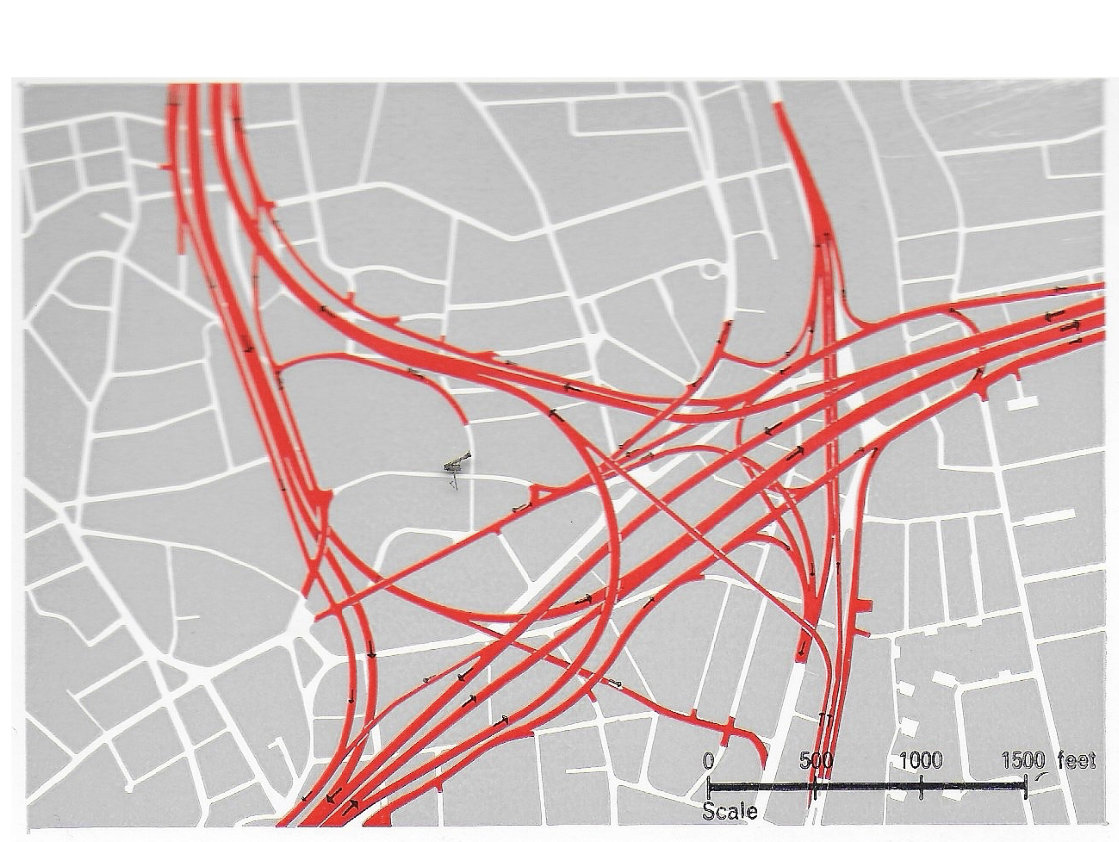
427The great dilemma presented by the freeways is that though they are logical in principle they are extremely formidable structures to have to incorporate into cities. They are enormously wide, and whether depressed or elevated they tend to sever the areas through which they pass, they generate great noise (even when carrying cars only), and the ungainly interchanges present special difficulties. One single interchange planned for the inner loop at Boston will take about 100 acres of land; if such an intersection were put down in London it might well be situated in an area where people were living at a density of 100 persons per acre, so the displacement of population alone would be 10,000. There is no doubt that the depressed freeway is the best from the point of view of minimising severance, noise and visual intrusion—there is a particularly successful example in Philadelphia—but the costs are astronomical in view of the sewers and services which have to be deflected. It is tempting to think that elevated roads can be simple slender structures with clean lines, but by the time they have been provided with access ramps (without which they are little use in built-up areas they tend to become wide, clumsy affairs.