Chapter 1: the working context
Accidents: 15–21
…assuming no readiness by the public to revolutionise its highway behaviour - that a radical improvement of the situation will come only from sweeping physical changes designed to reduce the sheer number of opportunities for conflict
-
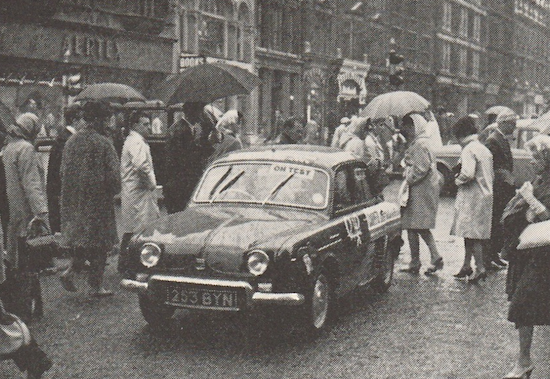
Fig. 14. The conflict—pedestrians and vehicles. -
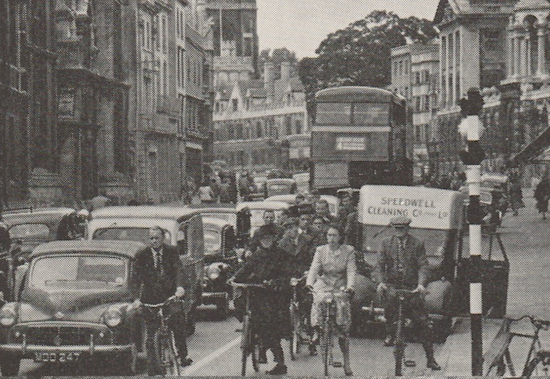
Fig. 15. The conflict—cyclists and vehicles (High Street, Oxford). -
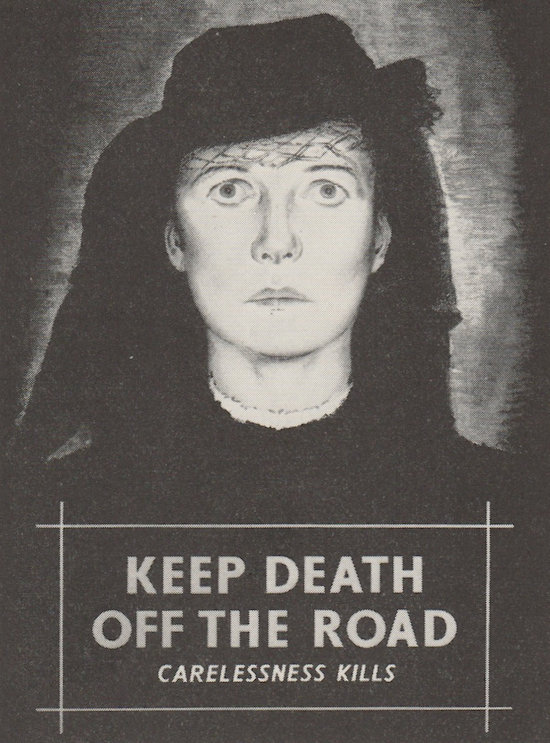
Fig. 16. The ‘Black Widow’ poster of 1946, with a message so stark that it seemed to give offence, and thus lost its point. -
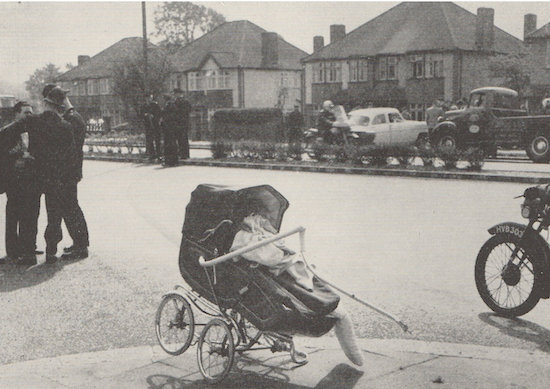
Fig. 17. The vulnerability of pedestrians. The father pushing the pram was killed, the baby injured. -

Fig. 18. Urban areas claim 73% of all casualties. -
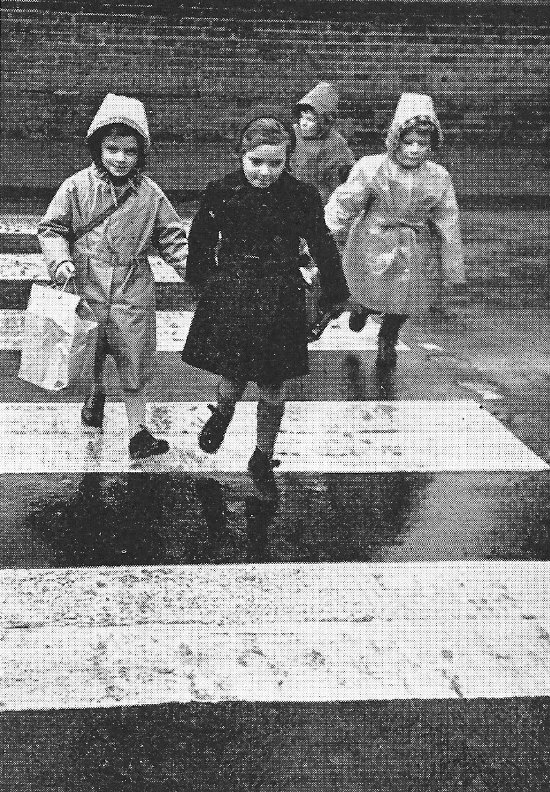
Fig. 21. Journey to school. In 1962, 4,287 child pedestrians between 5–9 years were killed or seriously injured.
Accidents
15The multiplication and increasing usage of vehicles has, unhappily, led to a great many accidents. The cause of accidents has been the subject of much dispute, and some of the reasons advanced bear the imprint of sectional interests. In theory it would seem beyond dispute that if all road users would take conditions as they find them, and exercise unremitting care all the time, there, would be no accidents other than those caused by an act of God or some unpredictable mechanical failure. Human beings being what they are, however, errors and miscalculations creep in, and though these are small in comparison with the total amount of movement that takes place they are nevertheless sufficient to add up to a formidable total.
16The number of accidents is not directly proportional to the total number of vehicles in circulation, for it is a fact that in 1934 (the peak year for accidents before the War) there were 238,946 casualties with only 2,405,392 vehicles in use, whereas in 1960 the corresponding figure was 347,551 casualties with some 9,383,140 vehicles. Thus a fourfold increase in the number of vehicles has led only to a 45% increase in casualties. There are many reasons to account for this, including improved techniques for the control of intersections, elimination of "black-spots” better vehicle design, and the gradual improvement of standards of road usage. Nevertheless there is a depressing consistency about the figures – month by month, holiday period by holiday period, year by year – which seems to indicate that from a given number of potentially conflicting traffic movements a predicable number of accidents will take place. The lesson seems to be – assuming no readiness by the public to revolutionise its highway behaviour - that a radical improvement of the situation will come only from sweeping physical changes designed to reduce the sheer number of opportunities for conflict.
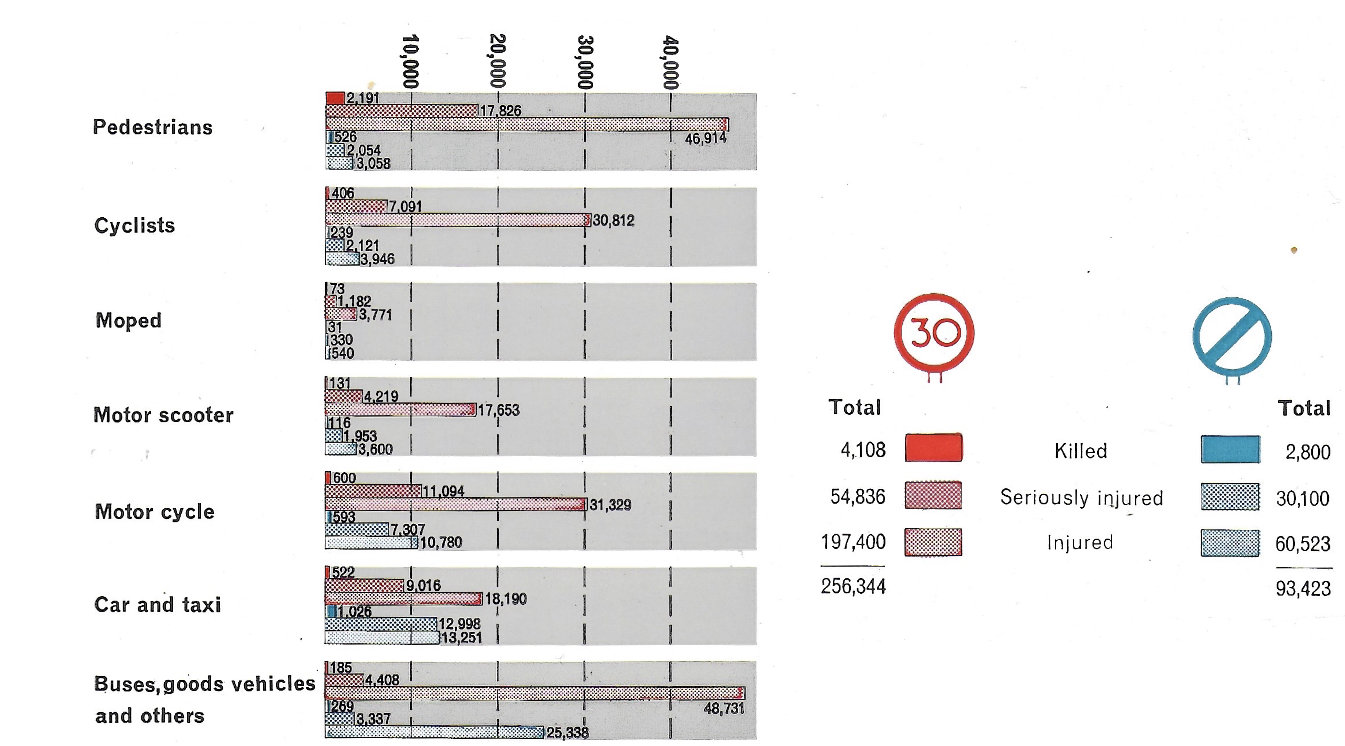
17It is understandable that accidents should be particularly numerous in the crowded conditions of towns, and 73% of all casualties take place in urban areas (as defined by the existence of a 30 mph, speed limit) (Figure 19). Motor vehicles of one kind or another are of course involved in most of these accidents. There is, however, a difference of incidence inasmuch as the proportion of fatal accidents is greater in open areas than in built-up areas – presumably due to the higher speed at which accidents take place. Figures 14 and 15 show the extent of the unhappy conflict, particularly in urban areas, between vehicles on the one hand and pedestrians and cyclists on the other.
It is sometimes represented that traffic accidents as a social evil do not bear comparison with deaths and injuries due to fire, accidents in the home and industry, or even to natural causes such as cancer. In figure 20 an analysis is given of all the accidental deaths and injuries in Great Britain for 1961, from which it can be seen that accidents account for nearly one third of all fatalities. It must be concluded that they are a very great social evil indeed

In addition to accidents involving death and personal injury, there is also a vast number of lesser accidents resulting in damage to vehicles. These are particularly numerous in urban areas where the least misjudgment when driving or parking can result in a crumpled wing or scraped panel. All these accidents set other processes in train – in repair garages, spare-parts depots, and insurance offices. In its wider context this effort surely ranks as gigantically unproductive and wasteful.
20The cost to the community of road accidents has been the subject of several inquiries. The pioneer study was made by Professor J. H. Jones of Leeds University in 1946 when he estimated that the average annual cost for the years 1935–38 was £60,000,000. The Royal Society for the prevention of Accidents, using professor Jones’ method, has estimated that in 1961 the cost of chompensation, for personal injury amounted to £190 millions, damage to and repair of property £19 millions, administrative costs £21 millions, giving a total cost of $230 millions.* No breakdown of these figures between urban and rural areas is available, but as previously mentioned, a rough guide is provided by the fact that 73% of all previously occurred in built-up areas.
* See Basic Road Statistics, published by the British Road Federation 1962.
21It is interesting, finally, to compare the figures for the number of persons killed in motor vehicle accidents in Britain (1961) with those if other countries:
France: 8,700,000 vehicles; 9.337 fatalities; one fatality for every 935 vehicles.
W Germany: 6,100,000 vehicles; 14,160 fatalities; one fatality for every 430 vehicles.
Italy: 3,000,000 vehicles; 8,000 fatalities; one fatality for every 375 vehicles.
U.S.A: 75,000,000 vehicles; 38,000 fatalities; one fatality for every 2,000 vehicles.
The corresponding figures for Britain were:
9,906,000 vehicles; 7619 fatalities; one fatality for every 1,410 vehicles. This is slender evidence on which to generalise, but the ratio for the United States suggests that, in some way, matters are better contrived than in Europe.