Chapter 4: Some lessons from current practice
Stockholm: 409–411
The lesson seems to be that in a big city, if the main tidal flows of car commuters can be avoided, then the residual motor traffic problem can be handled
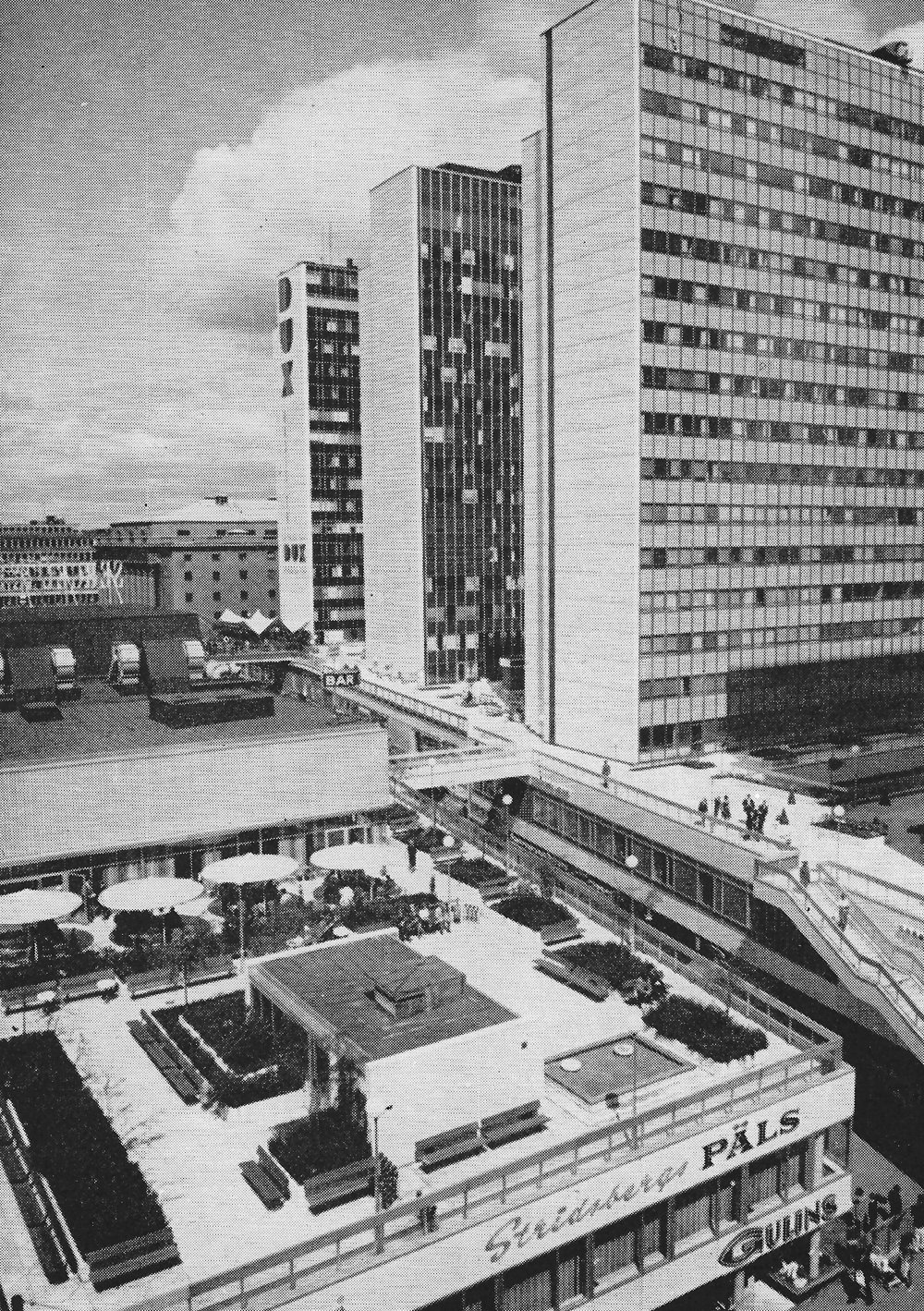
Fig. 233 Stockholm. The multi-level reconstruction in the centre.
Stockholm
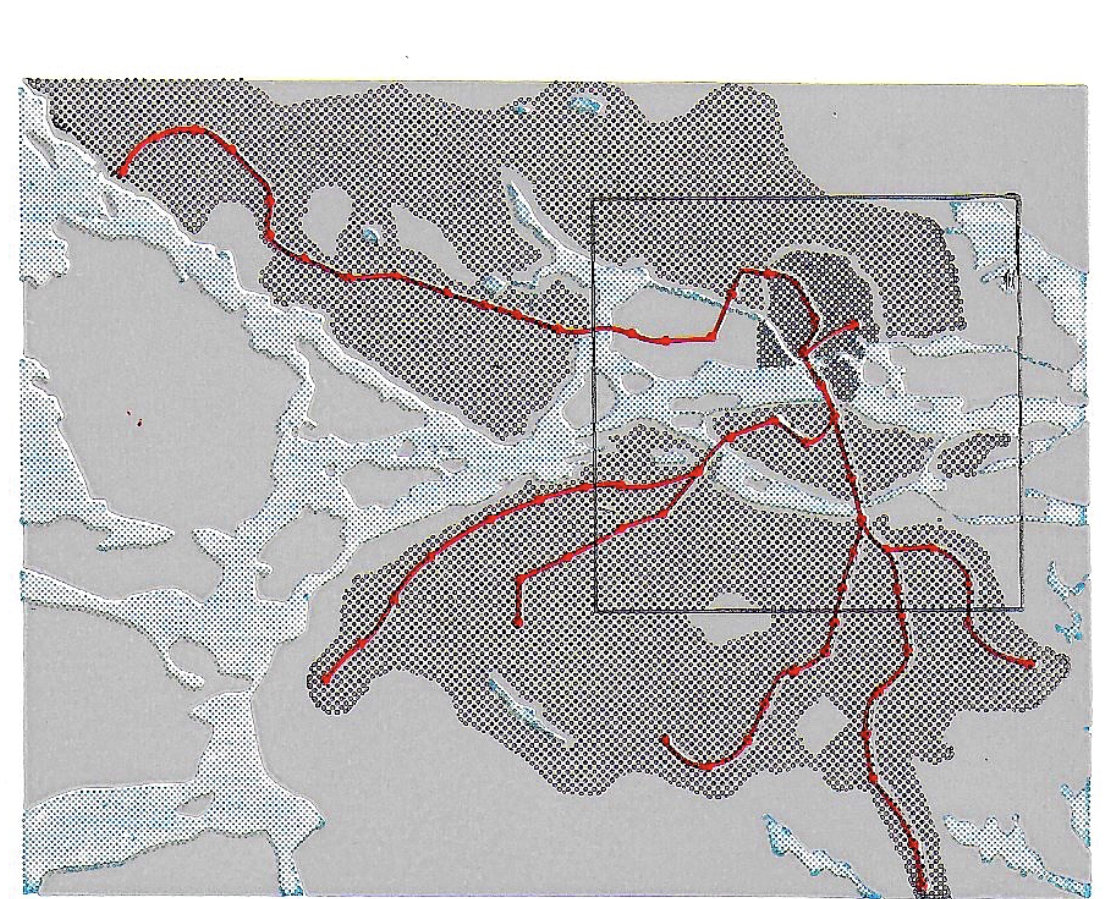
409It would require a long account to do justice to post-war planning and achievement in Stockholm. From the point of view of our present study we think the most significant point is that in this city, with a metropolitan population of one million, the post-war expansion has been based primarily on a new underground railway system, even though the country has the highest car ownership ratio in Europe. It seems to have been clearly understood, as early as 1941, that the bulk of the passenger traffic between home and work would have to be carried by public transport if wholesale and impossibly costly reconstruction of the city centre was to be avoided. It is very significant that a city of this size should have found it possible to finance the construction of an underground system, and to reach the bold conclusion that in the general public interest it should be a subsidised undertaking (Figure 231).
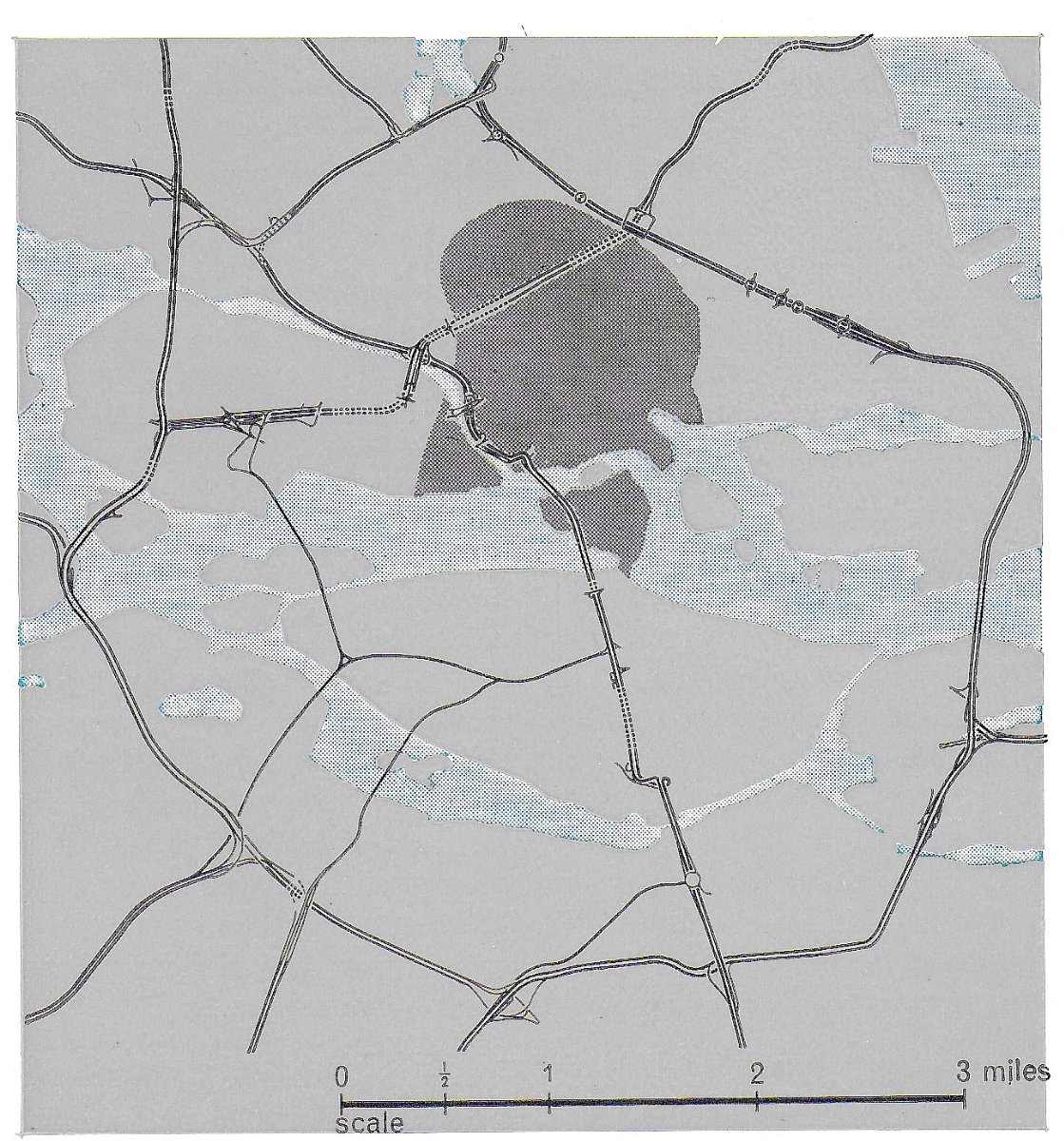
Perhaps of equal significance, however, is the elaborate highway network (Figure 232) that is also considered necessary, much of it to motorway standards, in spite of the policy that the main commuter flows to the centre should be dealt with by means of the underground railway system. No less than 45,000 parking spaces in special garages are still required in the Inner Town, and these in addition to parking places just outside the Inner Town linked to the motorway approaches. The lesson seems to be that in a big city, if the main tidal flows of car commuters can be avoided, then the residual motor traffic problem can be handled, but it is still of formidable dimensions.
In the centre of Stockholm much interesting redevelopment is being undertaken over large areas, either in the form of pedestrian streets or in multi-level arrangements. A group of five tall office blocks, for example, stands on a 20 ft. podium which is used as a terrace for pedestrians, with pedestrian shopping streets at ground level, and three levels below ground for servicing and parking. Many problems remain however before the motor vehicle can be said to be completely under control, and it can be argued that the new road system is having an undesirably disruptive effect on the waterfront. But a clear impression is obtained that there is real co-ordination of all kinds of transport with town planning and redevelopment, and that the City's bold policy of wholesale land acquisition since the beginning of the century has helped to make this possible.