Chapter III – part three: A historic town
Traffic and accessibility: 264–266
Yet to provide additional car parking facilities in the centre would be the surest way of increasing the amount of traffic using the already congested streets
-
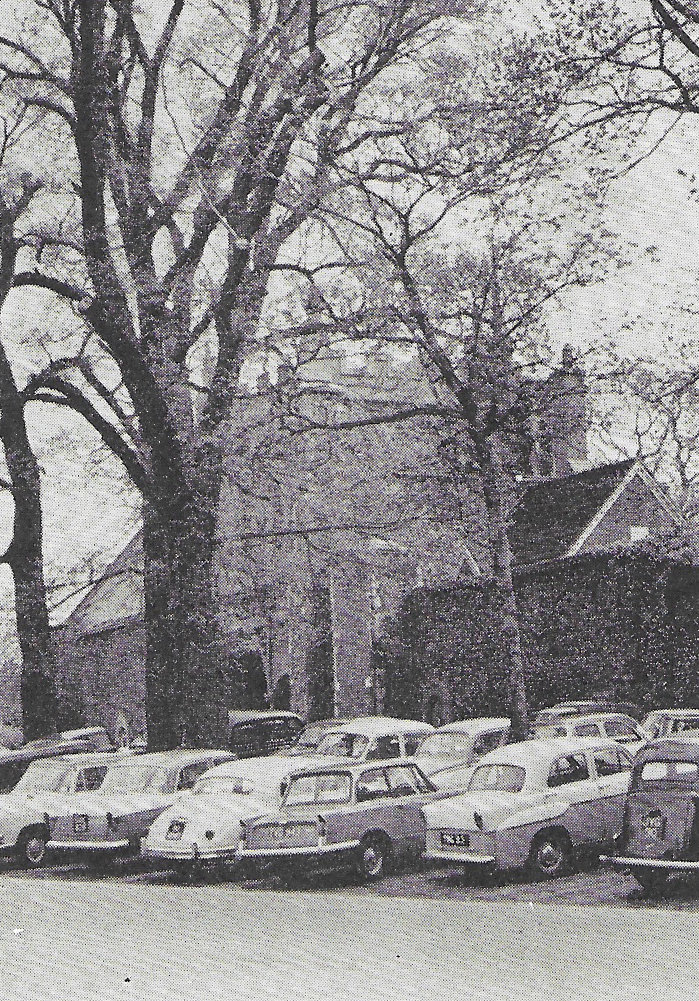
Fig. 155 Every accessible space is taken up by cars. The Gate to the Bishop's Palace.
Traffic and accessibility
264Just as the standard of environment in the centre of Norwich suffers from too much traffic using the ancient street network, so accessibility to the buildings suffers likewise. Because of the narrowness of the carriage-ways in many of the streets, a stationary vehicle can impede the flow of traffic in the whole street. Conversely, regulations designed to keep traffic moving often frustrate direct access to individual premises.
265The concentration of industrial buildings in the vicinity of the River Wensum is largely served by the old street network. This causes heavy vehicles to use the central shopping streets. As the industrial and commercial firms expand so the accessibility problem is aggravated. In the area around Magdalen Street and Colegate, for example, the residential uses become less common, whilst the volume of locally generated industrial traffic grows and chokes the local streets. An air of incongruity and isolation attaches to those historic buildings that remain. For example, Pottergate, despite its extreme narrowness, has become the main access road for many modern commercial premises.
266The shortage of space for car parking is acute and increasing month by month. Yet to provide additional car parking facilities in the centre would be the surest way of increasing the amount of traffic using the already congested streets.