Chapter 1: the working context
Growth of motor traffic: 3
The new invention was prevented from taking root for a few years by… the Red Flag Acts because they required any mechanically-propelled road vehicle to be preceded by a man on foot carrying a red flag
-

Fig.1. The beginning of it all. The 1888 Benz.
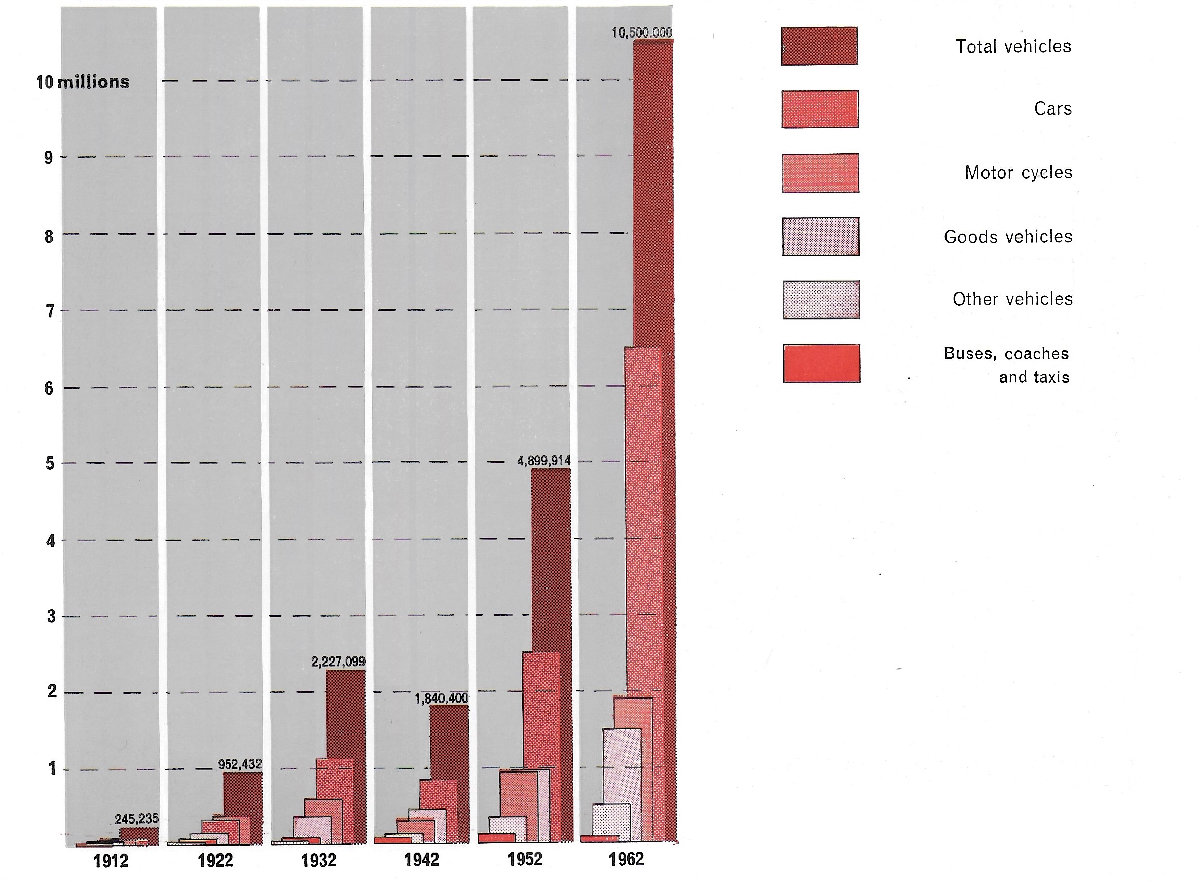
The growth of motor traffic
3The first motor vehicle to run on the roads of Britain was a Benz three-wheeler imported from the Continent. The year was 1888. The new invention was prevented from taking root for a few years by the operation of the Locomotive Acts (known also as the Red Flag Acts because they required any mechanically-propelled road vehicle to be preceded by a man on foot carrying a red flag) which had been passed originally to protect the railways from the competition of road steam-coaches. But in 1896 the Acts were repealed, and importation and home-manufacture then began in earnest. By the outbreak of war in 1914 there were nearly 400,000 vehicles in use in Britain. Private cars, motor cycles, motor buses, taxis, coaches, and goods vehicles of many descriptions had already been differentiated, and within two years, under the stress of war, the tracked vehicle was to prove itself on the battlefields of the Somme in the form of the tank. Thus within 30 years of its introduction the motor vehicle had shown all its paces, and the intervening 45 years up to the present time have been given over to consolidation and improvement, but without further addition to the basic range of performance. Numbers however have steadily increased, and the motor vehicle has infiltrated into the country’s affairs to an extent which amounts to a social and economic revolution. (Figure 6.)