Appendix 2: Cost-benefit analysis and accessibility and environment
The costs: 9–11
The costs
9Schemes A, B and C would involve the following works: primary distributor, central area local distributor roads, access and service roads and public pedestrian areas, car parks (both surface-level and multi-storey) the bus station and comprehensive development. All these appear in Scheme C, but in the other two schemes there are no multi-storey car parks or comprehensive redevelopment. It is somewhat unrealistic to assume no redevelopment in Schemes A and B, for clearly there would be some in due course, whether privately or publicly initiated, with consequent cost and benefits. But this is assumed to be sufficiently far removed in these instances to be ignored.
10
Costs for the purpose of this analysis are the net capital costs of preparing the land for building, irrespective of who bears them. This is the capital cost of acquiring, clearing and servicing the land, less the value of any land for building purposes. It includes roads and car parks. The cost of building is excluded*. Table I shows the net capital cost on this basis.
*This is because, at the time of development, the cost of the buildings can be assumed to equal their value if cost is taken to include developer's profit, so that their net cost is nil. In other words the net capital cost of a scheme is the same whether the buildings are included or not.
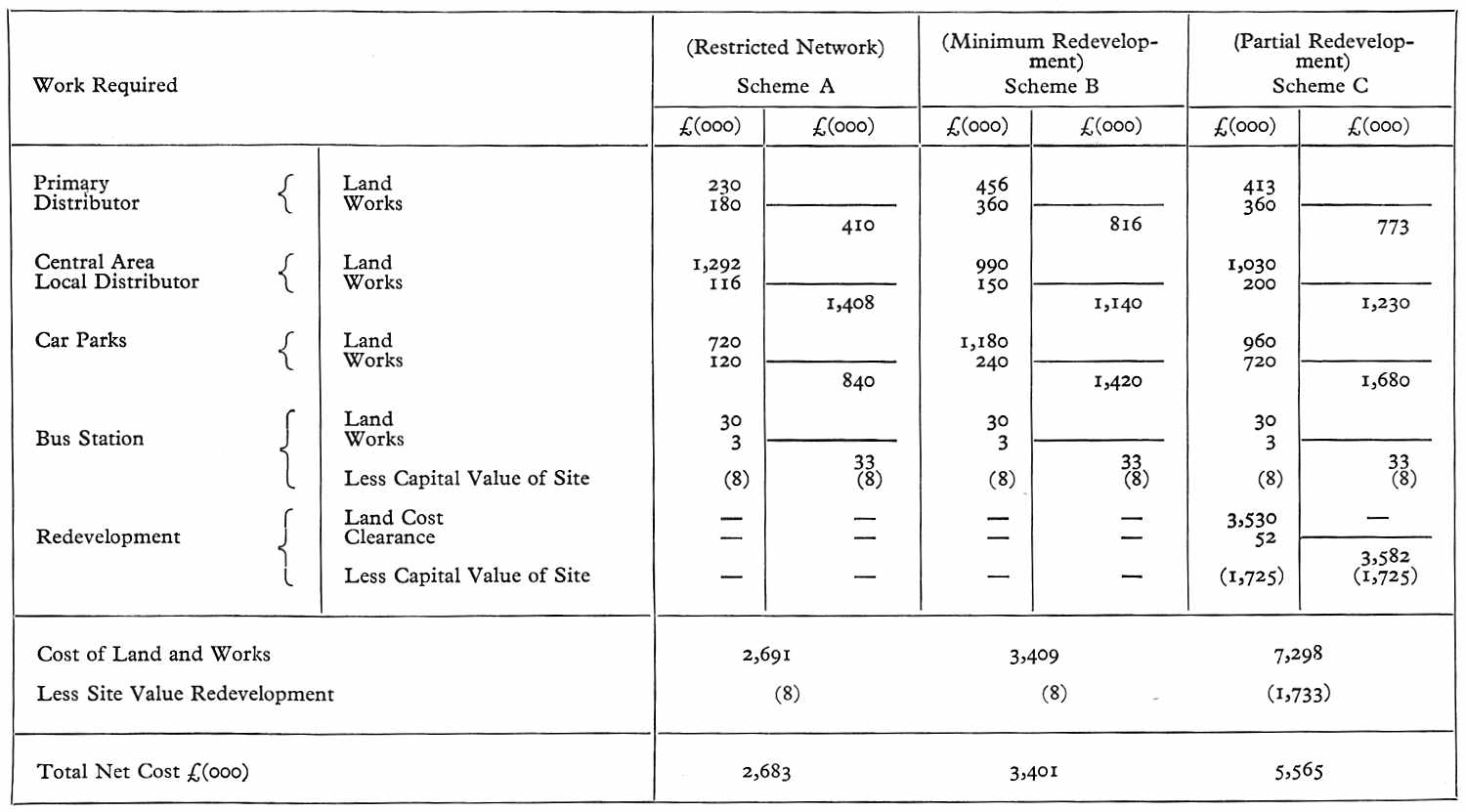
Table 1 brings out the following points:
- Scheme A would cost some £2,680,000. Of this about € 400,000 would go on the ‘restricted network’. € 1,400,000 on road works to improve central area circulation and £840,000 on the 2,058 public car parking spaces.
- Scheme B is designed with a higher standard primary distributor road to handle all the traffic expected (at peak hour in 2010), improved internal circulation and more public parking spaces (3,786) at ground level. The additional cost would be £700,000, an extra 27%. Of this, some £400,000 more (a total of £816,000†) would go on the primary distributor road and £680,000 on extra parking spaces, but the internal circulation roads would cost about £270,000 less, largely through saving in land cost.
- The third scheme (C) also has a primary distributor similar to that for Scheme B, still further improved internal circulation, about the same number of public parking spaces (3,639, of which 2,928 would be at ground level and 711 above ground in 4-storey garages) and comprehensive redevelopment to achieve improved layout, environment and accessibility. The capital investment is much greater, about £7,300,000, but net cost would be reduced to €5,560,000 when account is taken of the land values realised on redevelopment. The extra cost of Scheme Cover Scheme B is substantial, about £2,100,000. This is accounted for as follows. The primary distributor would cost about the same, the internal circulation an extra £ 100,000, the parking spaces an extra £250,000. The major increase would arise from the comprehensive redevelopment, which alone would result in a net cost of about £1,800,000.
- Special mention should be made of car park costs. For Schemes A, B, and C these average £425, £380 and £460 respectively per car park space. The increase in Scheme C over Scheme B, for about the same number of car park spaces, is due to the provision in Scheme C of some multi-storey car parks, whose extra construction costs outweigh the saving in land cost.